What Sensory-Friendly Orthodontic Care Looks Like for Neurodivergent Kids | Jawz Orthodontics
Learn what sensory-friendly orthodontic care looks like for autistic, ADHD, and sensory-sensitive children, and what parents should look for in a supportive office.
For many families, the biggest question is not whether their child may need orthodontic care.
It is whether the experience will feel manageable.
If your child is autistic, has ADHD, sensory sensitivities, anxiety, or other special needs, an orthodontic visit can feel like a lot all at once. Bright lights. New sounds. Unfamiliar people. Unexpected steps. Too much waiting. Too much talking. Too much happening near the face and mouth.
That is why sensory-friendly care matters.
At Jawz Orthodontics, we believe thoughtful care starts with understanding the child in front of us.
Why this topic matters to so many families
Autism awareness and neurodiversity-informed care are getting more attention for a reason. The CDC reports that about 1 in 31 eight-year-old children has been identified with autism spectrum disorder, and the AAPD defines special health care needs broadly to include physical, developmental, sensory, behavioral, cognitive, and emotional differences that may require more individualized support.
That means more families are asking an important question:
What does supportive orthodontic care actually look like for a child who experiences the world differently?
Sensory-friendly does not just mean “nice”
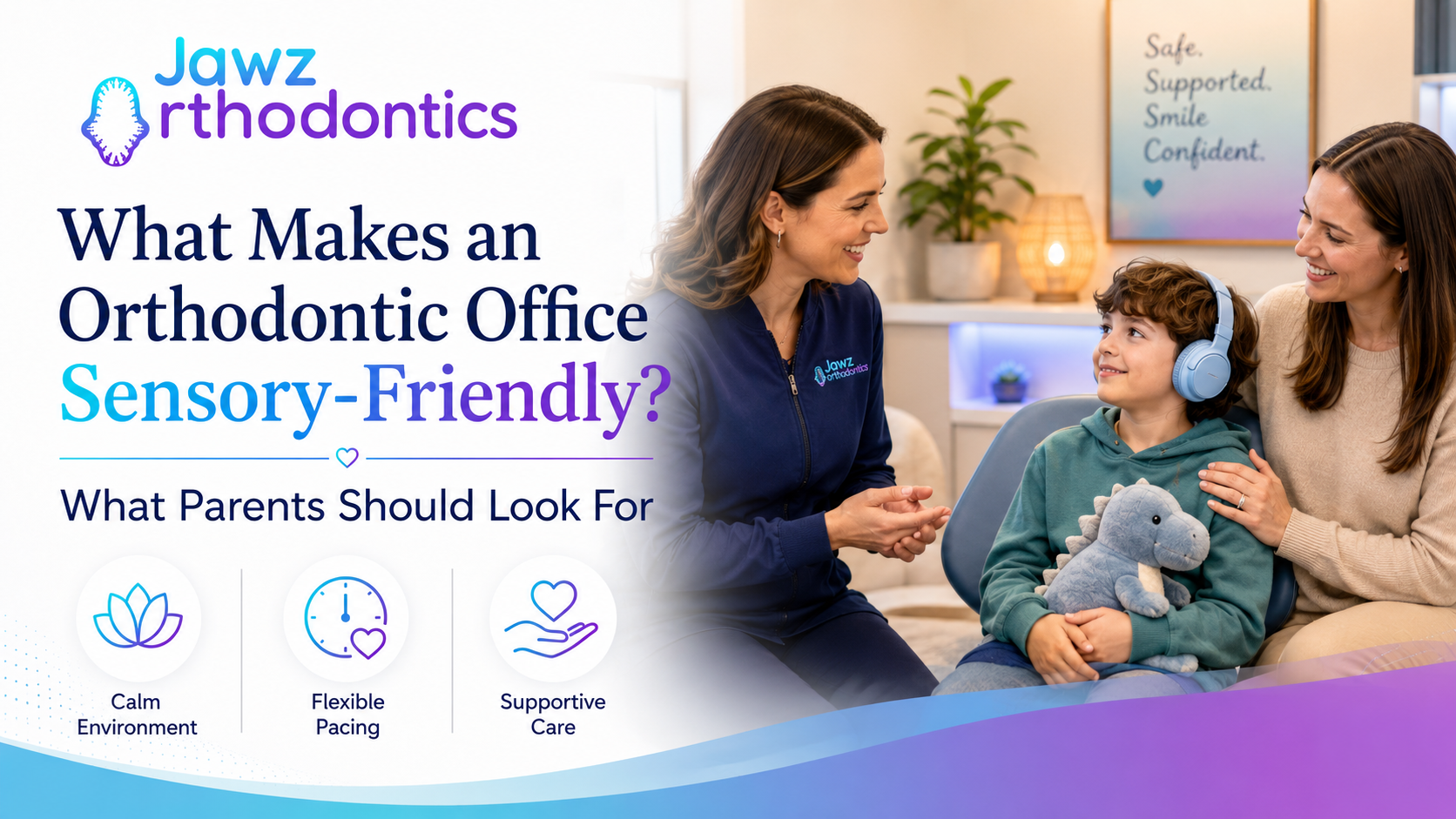
A warm team matters. Kindness matters. But sensory-friendly care goes further.
It means recognizing that some children experience light, sound, touch, pressure, transitions, and communication differently. The AAPD’s current behavior guidance specifically includes sensory-adapted dental environments, positive previsit imagery, direct observation, distraction, and desensitization as helpful tools for anxious patients and those with special health care needs.
In other words, the experience should be shaped around the child, not the other way around.
What parents may want an orthodontic office to understand
Every child is different, but common challenges may include:
- discomfort with bright lights or clinical sounds
- fear of someone working close to the face
- difficulty with transitions or waiting
- distress around unexpected steps
- strong sensitivity to sensations inside the mouth
- overwhelm from too much language or too many instructions at once
For some children, even a simple consultation can feel big if the environment is not handled thoughtfully.
What supportive care can look like
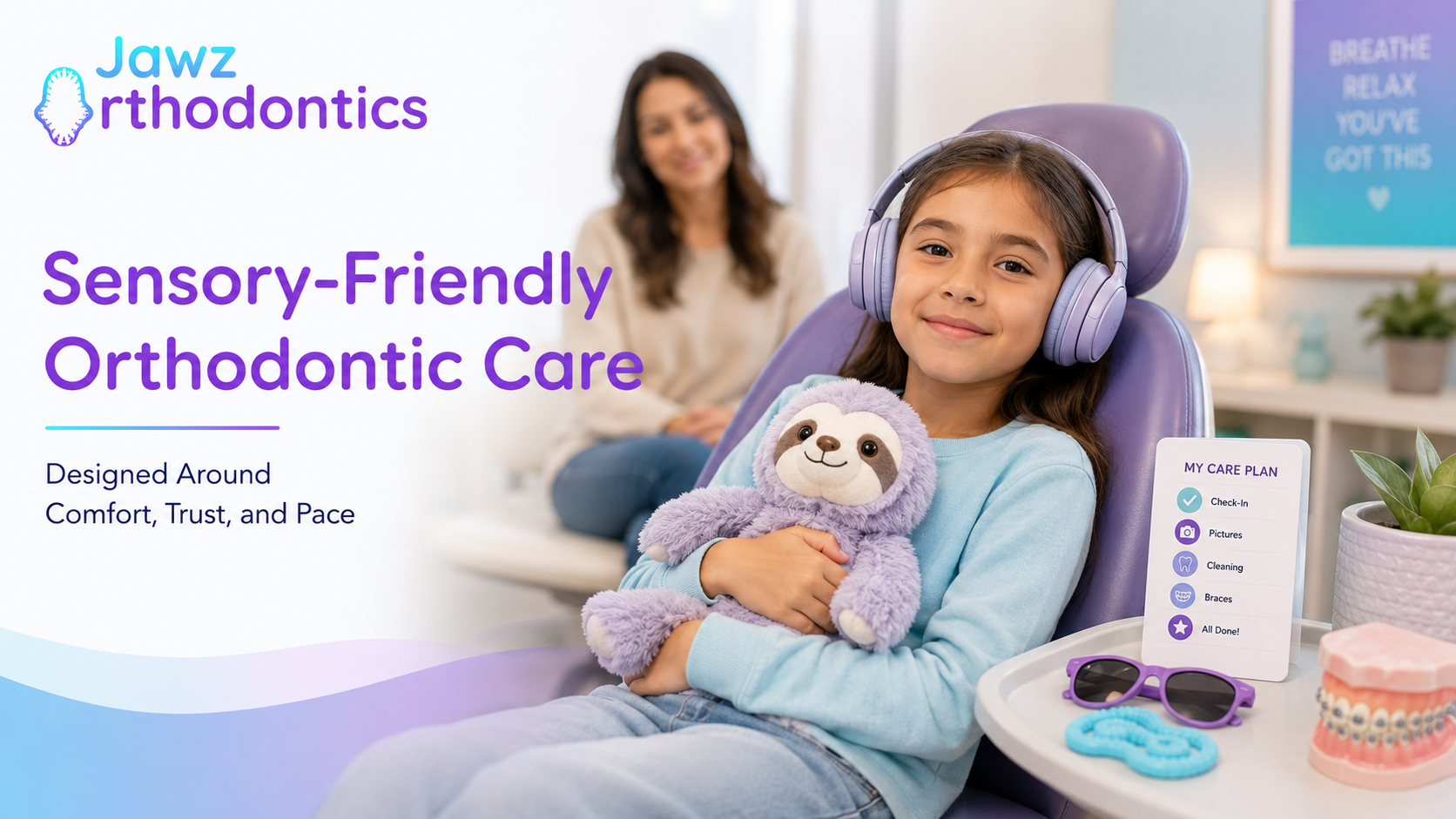
A more sensory-friendly orthodontic experience may include:
- talking with parents before the visit about triggers and supports
- scheduling at a time of day when the child does best
- using simple, predictable language
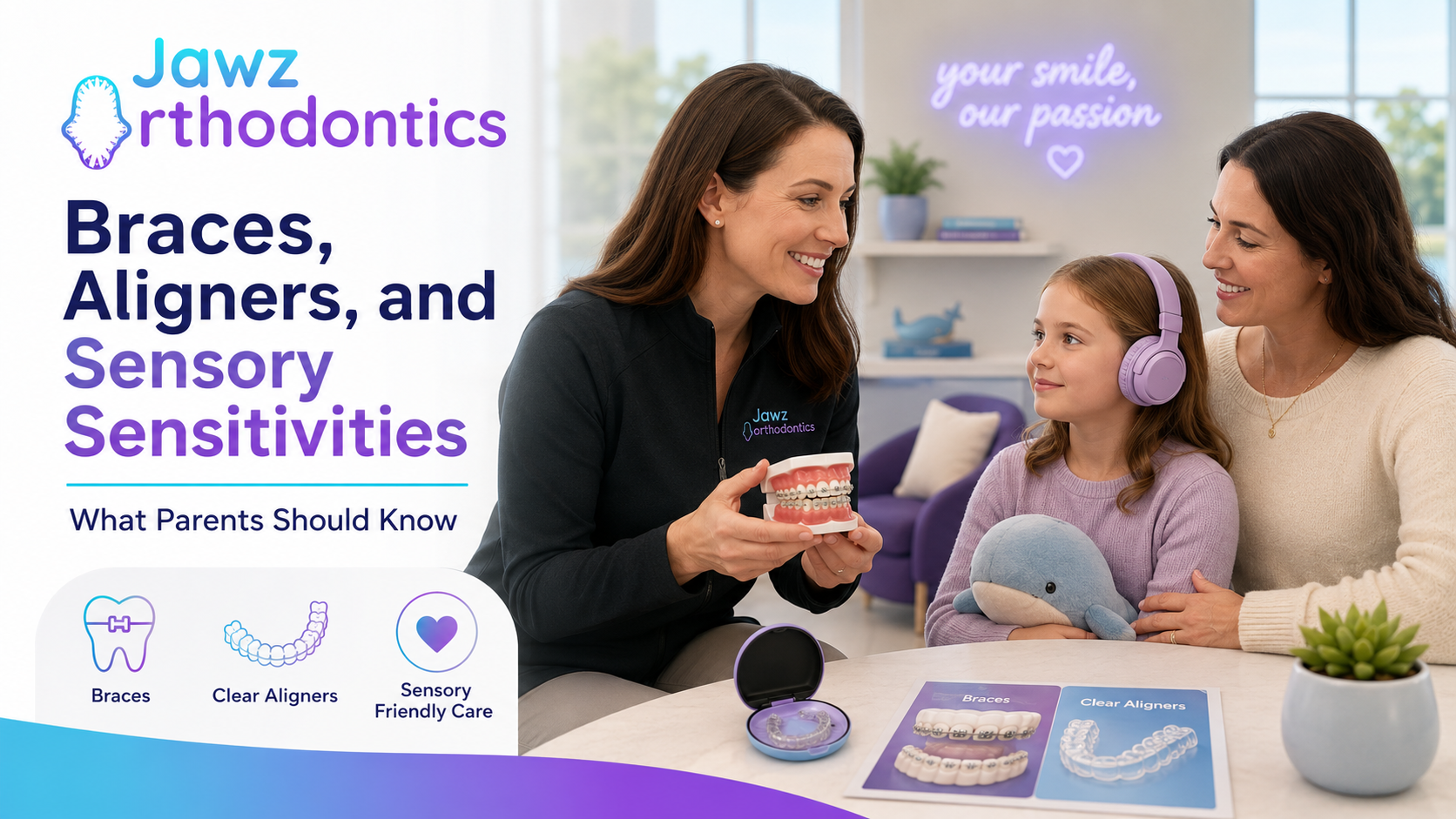
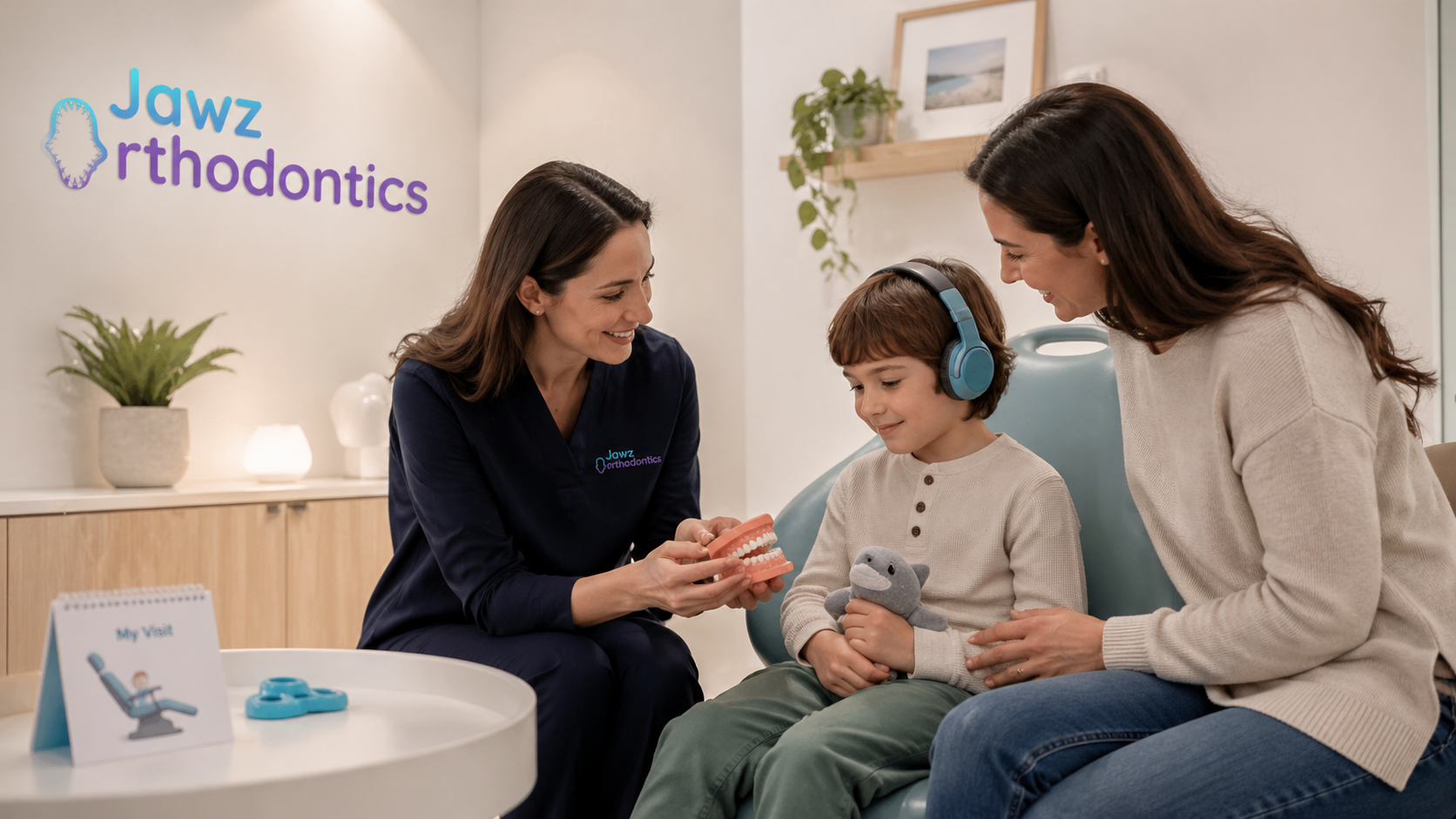
- showing tools before using them
- allowing breaks when needed
- moving more slowly through the appointment
- celebrating small wins instead of forcing every step at once
That approach is consistent with current AAPD best practices for patients with special health care needs, which emphasize individualized communication, desensitization, sensory-adapted environments, and flexibility in behavior guidance.
Why this matters in orthodontics
Orthodontic care is not just one visit. It is a process.
That is especially important for neurodivergent and sensory-sensitive children. When the first experience feels rushed or overwhelming, treatment can become harder than it needs to be. But when a child feels understood, prepared, and supported, the path forward often becomes much more manageable.
The goal is not perfection.
The goal is a care plan your child can realistically tolerate and trust.
The Jawz approach
At Jawz Orthodontics, we know successful care is not only about the bite.
It is also about comfort, pacing, trust, and communication.
Some children need a slower introduction. Some need visual preparation. Some need shorter visits, extra breaks, or a more flexible pace. That does not make care less possible. It means care should be more personalized.
Because for children with special needs, feeling safe is not extra.
It is part of good care.
Wondering whether your child would benefit from a more sensory-friendly approach?
If you have been putting off an orthodontic evaluation because you are not sure how your child will respond, you are not alone.
A supportive first visit can help you understand what is needed, what can wait, and what kind of approach will help your child succeed.
Sometimes the most important part of the visit is not starting treatment.
It is finally feeling understood.