What Is a Crossbite — and Why Does It Matter in Growing Kids? | Jawz Orthodontics

Jawz . • April 20, 2026

A crossbite can affect more than appearance. Learn what parents should watch for, why it matters during growth, and when an orthodontic evaluation may help.
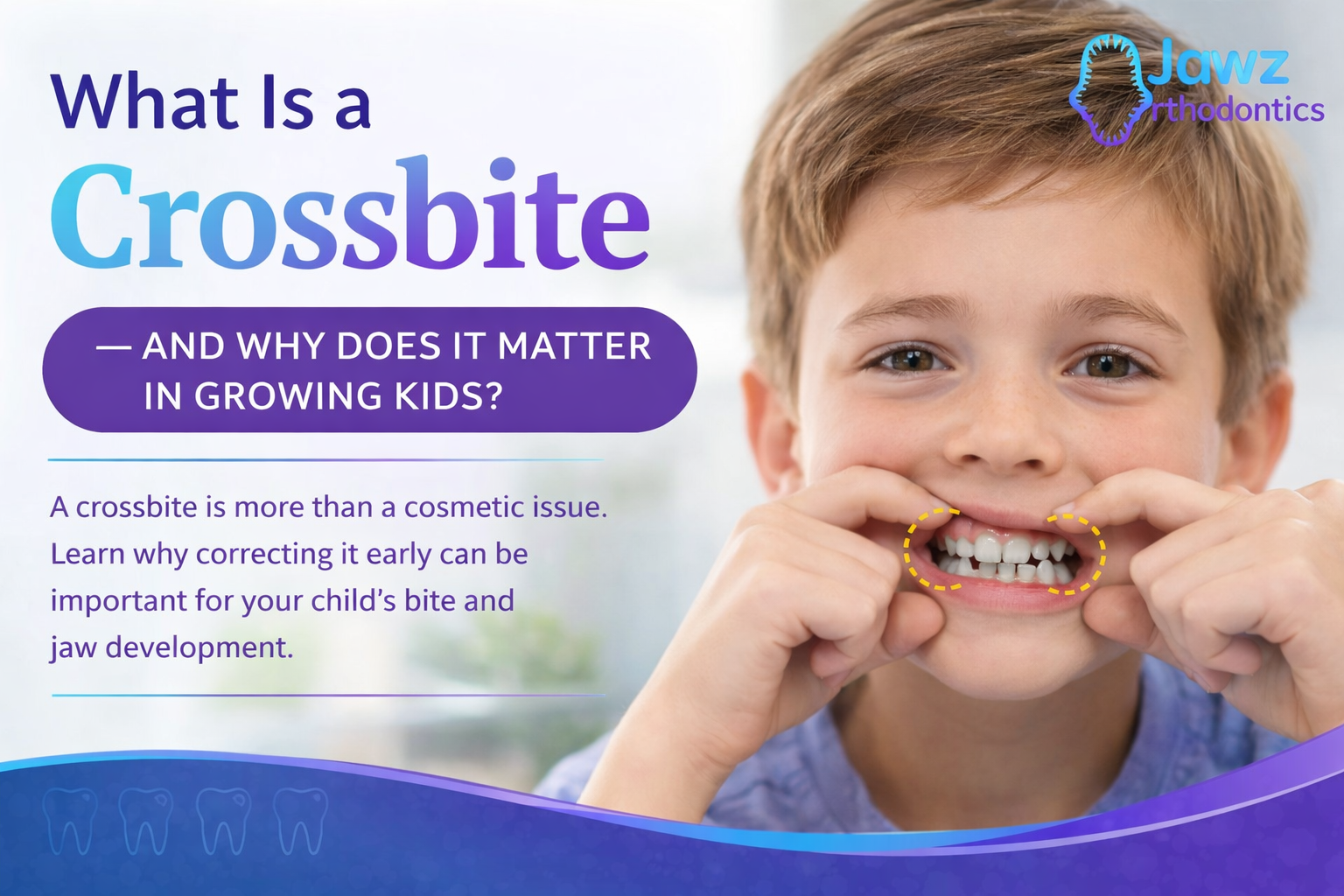
Sometimes parents notice something about their child’s bite that just seems a little off.


Maybe a top tooth sits behind a bottom tooth. Maybe the back teeth do not line up the way they should. Maybe chewing looks uneven, or the jaw seems to shift when the child bites down.


Those concerns can sometimes point to a crossbite.


At Jawz Orthodontics, care is built around more than straight teeth. The practice emphasizes function, health, and confidence working together, and Dr. Sara’s clinical focus includes complex bite conditions and sleep-disordered breathing in addition to comprehensive orthodontic treatment.


What is a crossbite?

A crossbite is a type of bite problem in which certain upper teeth bite inside the lower teeth instead of outside them. The American Association of Orthodontists says crossbites commonly show up in three forms: posterior crossbite in the back teeth, anterior crossbite in the front teeth, and buccal crossbite or Brodie bite, where upper back teeth bite completely outside the lowers.


In simple terms, the upper and lower arches are not fitting together the way they should.


What causes a crossbite?

According to the AAO, crossbites can develop from a mix of factors, including genetics, delayed loss of baby teeth, abnormal eruption of adult teeth, prolonged thumb sucking, or atypical swallowing patterns. The AAPD’s current best-practice document also includes crossbites among the developing dentition concerns that deserve careful diagnosis and timing decisions.


That matters because a crossbite is not always “just a crooked tooth.” Sometimes it reflects how the teeth are erupting. Sometimes it reflects how the jaws are developing.


What might parents notice at home?

Parents are often the first to spot signs such as:

  • a top front tooth sitting behind a bottom tooth
  • upper back teeth biting inside the lower teeth
  • a jaw that shifts to one side when biting
  • uneven chewing
  • wear on certain teeth
  • a smile or bite that looks off-center


The AAO notes that one of the clearest signs of a crossbite is when the upper teeth fit inside the lower teeth in the front and/or back when biting down normally.


Why can a crossbite matter during growth?

This is where early evaluation becomes important.


The AAO says that addressing a crossbite early, especially while a child’s face and jaws are still developing, can help prevent jaw shifting, lopsided or asymmetric jaw growth, and excessive or abnormal enamel wear. In more severe untreated cases, jaw surgery may eventually be needed.


The AAPD similarly states that early diagnosis and treatment of developing bite abnormalities can help support a stable, functional, and esthetic occlusion, and that treatment timing should be based on a proper diagnostic summary.


That does not mean every crossbite needs immediate treatment. It does mean it is worth evaluating thoughtfully while growth is still on your side.


Does every child with a crossbite need treatment right away?

Not always.


Some children need treatment sooner because the bite is affecting function or jaw development. Others may need monitoring, especially if the finding is mild or timing suggests a better window is coming. The AAO recommends that children have an orthodontic checkup no later than age 7 because, by then, enough permanent teeth are usually present to evaluate how the teeth and jaws are developing.


That philosophy fits Jawz well. The practice highlights early evaluations, orthopedic treatments, and personalized care for children, teens, adults, and patients who benefit from extra patience or accommodations.


How is a crossbite treated?

Treatment depends on the type of crossbite and how much of the bite or jaw is involved.


The AAO says treatment for growing patients may include a palatal expander to widen the upper jaw, followed by braces or clear aligners to help position the teeth properly. Cleveland Clinic also notes that palate expanders are commonly used to widen a narrow upper jaw and help correct conditions like crossbites and overcrowding.


In some cases, treatment is simpler when started during growth. In others, waiting too long can make correction more complicated.


What happens at an evaluation?

A good evaluation is about clarity, not pressure.


At Jawz, the overall message on the site is thoughtful orthodontic care centered on comfort, clarity, and confidence. The practice positions treatment planning around the individual rather than a one-size-fits-all approach.


For a child with a possible crossbite, that means looking at:

  • how the teeth fit together
  • whether the jaw shifts when biting
  • whether the upper jaw seems narrow
  • whether the issue looks dental, skeletal, or both
  • whether the right next step is treatment now or monitoring


The Jawz approach

At Jawz Orthodontics, the goal is not to recommend treatment just because a problem is visible.


The better goal is to understand why the bite looks the way it does, whether growth is being affected, and whether acting now would create a better long-term result. That kind of individualized, function-aware approach is consistent with how Jawz describes its care overall.


Wondering if your child may have a crossbite?

If you have noticed a tooth sitting “the wrong way,” an uneven bite, jaw shifting, or chewing that does not look quite right, an orthodontic evaluation can help you understand what is going on.


Sometimes the answer is treatment.

Sometimes the answer is monitoring.

Either way, knowing earlier gives families better information and more options. The AAO’s guidance to have children screened by age 7 is designed for exactly that reason.
By Jawz . May 14, 2026
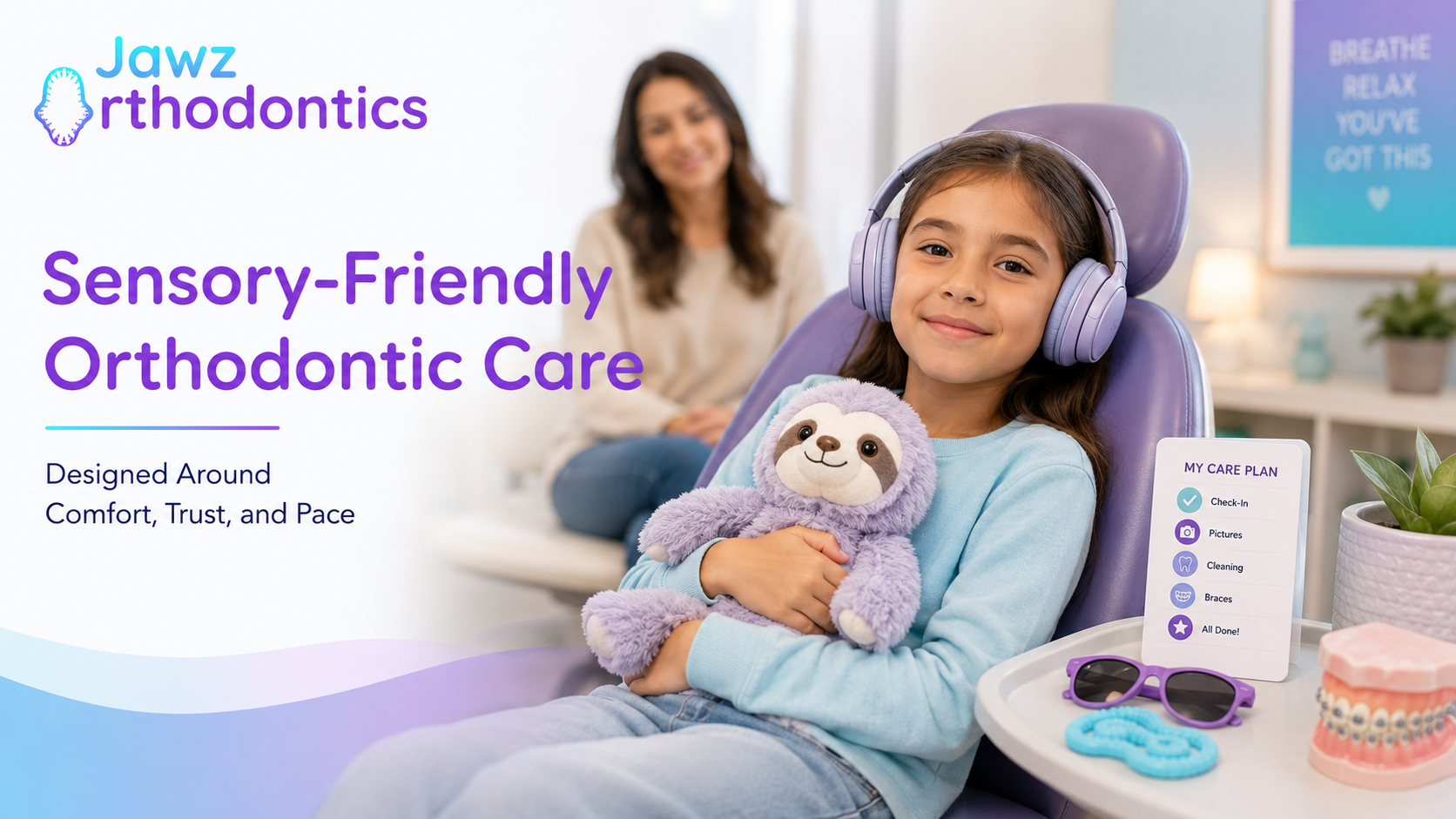
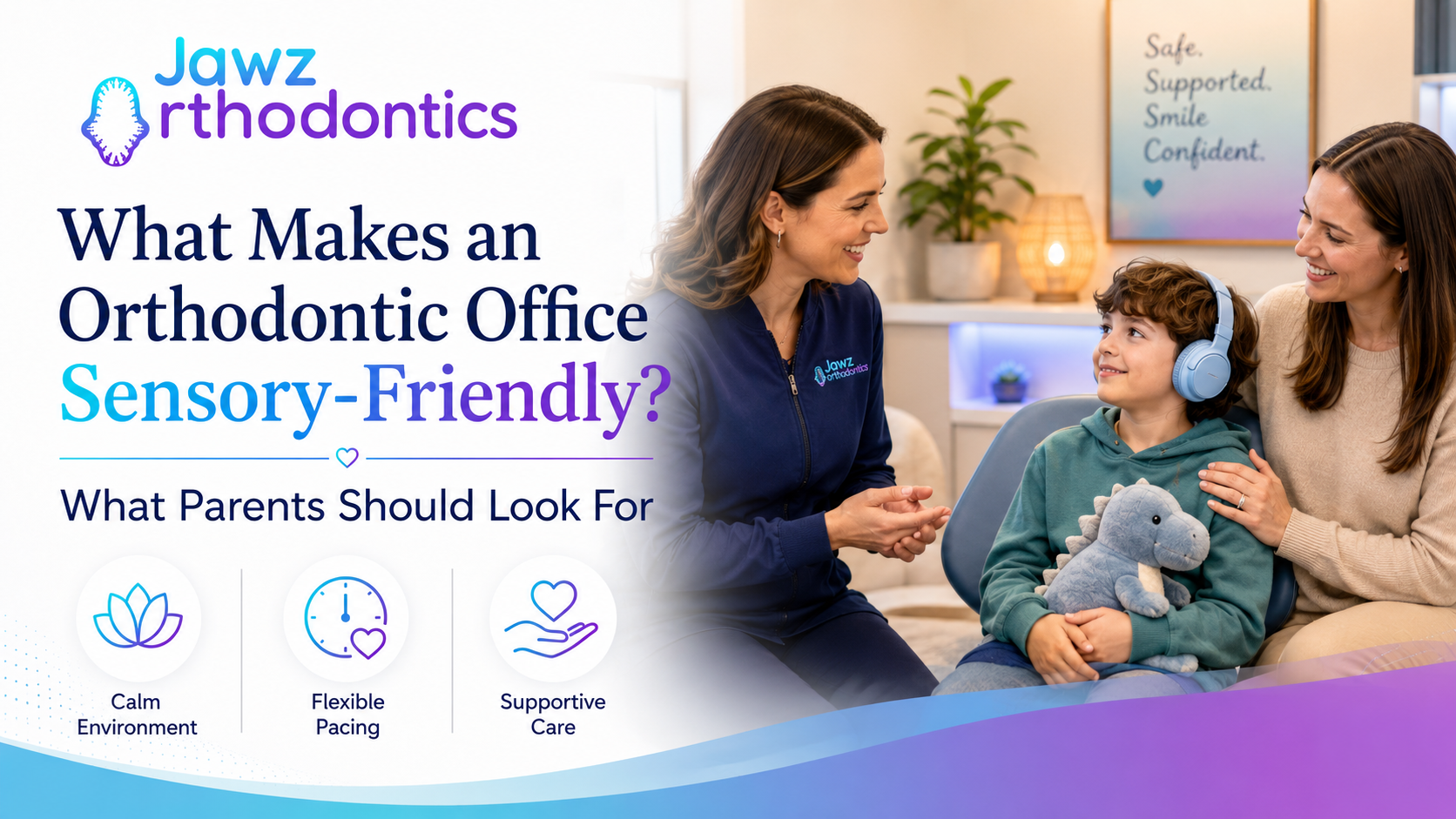
A sensory-friendly orthodontic office can make a major difference for children with autism, anxiety, ADHD, or sensory sensitivities. Here is what parents should look for.
By Jawz . May 8, 2026
For children with sensory sensitivities, choosing between braces and aligners is not always simple. Learn what parents should consider and how to find the right fit.
By Jawz . April 30, 2026
Learn how to prepare a child with autism for an orthodontic visit, including sensory-friendly tips, communication strategies, and what parents can expect.
By Jawz . April 2, 2026
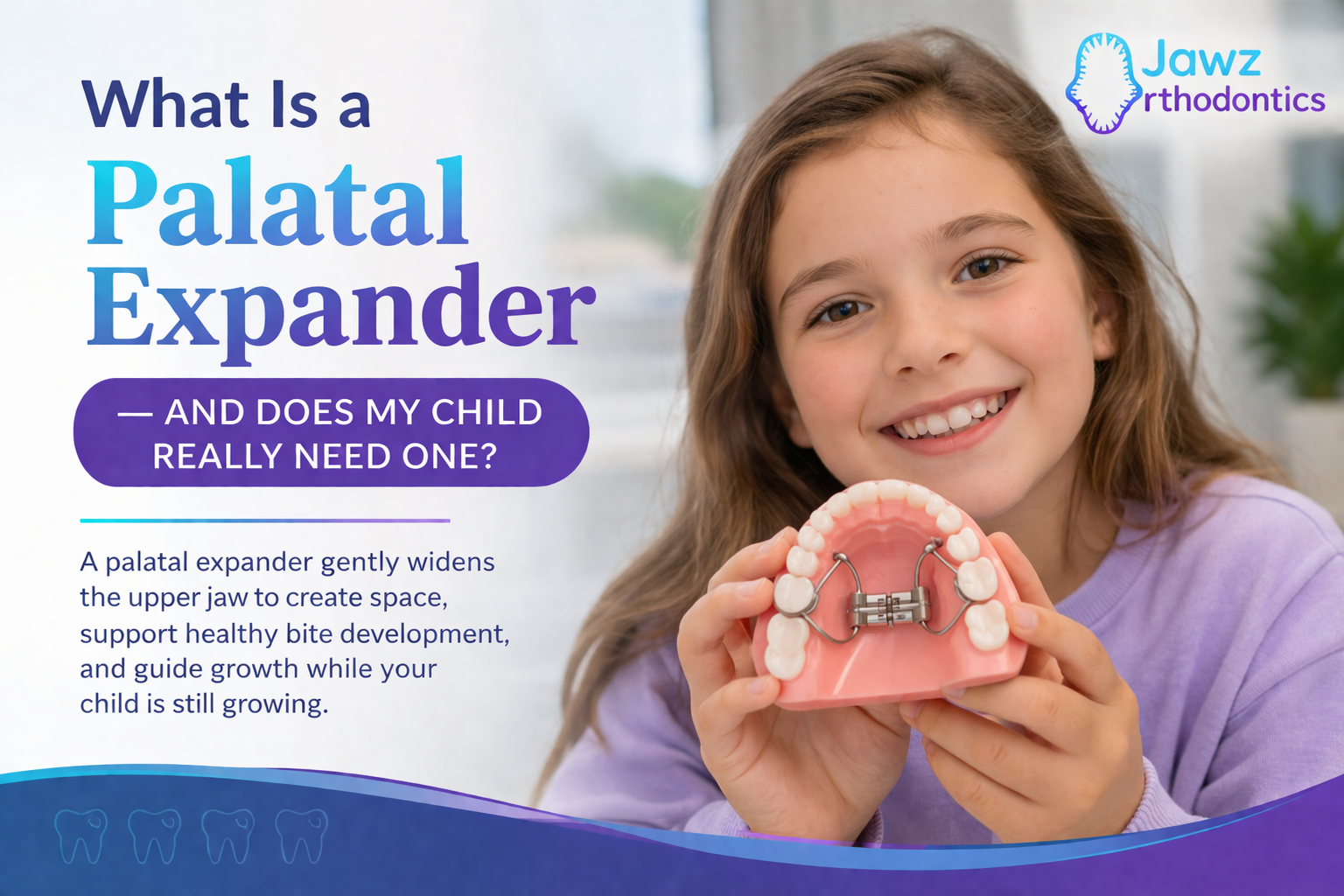
A palatal expander can help widen a narrow upper jaw in growing children. Learn when it may be recommended and how Jawz determines whether it is truly needed.
By Jawz . March 26, 2026
Many parents notice small things before they ever think about orthodontics. A child who sleeps with their mouth open. Dry lips in the morning. Snoring. Restless sleep. A constantly open-mouth posture during the day. Maybe crowded teeth start to appear, or the upper jaw seems narrow. On their own, these signs do not always mean something is wrong. But together, they can sometimes point to a pattern worth paying attention to. At Jawz Orthodontics, we look at more than whether teeth are straight. We also evaluate how the bite, jaws, and overall development are working together. In some children, mouth breathing can be part of that bigger picture. Mouth breathing is more than a habit Many people assume mouth breathing is just a phase or a harmless habit. Sometimes it is temporary, especially during a cold or allergy flare-up. But when mouth breathing becomes a regular pattern, it can affect how a child rests, sleeps, and develops over time. Healthy breathing usually happens through the nose. Nasal breathing helps support normal oral posture, facial development, and comfort. When a child consistently breathes through the mouth instead, the lips may stay apart, the tongue may rest low, and the muscles of the face and jaws may not function the same way they would with normal nasal breathing. That does not mean every mouth-breathing child will need orthodontic treatment. It does mean the pattern deserves thoughtful evaluation. Signs parents may notice at home Parents are often the first to spot clues that something may be off. Some common signs include: sleeping with the mouth open snoring or noisy breathing at night restless sleep dry mouth or dry lips in the morning chronic congestion open-mouth posture during the day crowded teeth a narrow-looking upper arch bite changes that seem to be developing as the child grows Any one of these signs may or may not be significant. But when several show up together, it can be helpful to take a closer look. Why this matters during growth Childhood is a time of active growth and development. That is one reason orthodontic evaluations can be so valuable, even before braces are the obvious question. At Jawz, early orthopedic treatment or growth guidance may be considered for younger patients when concerns involve airway, speech, chewing, or bite development. The goal is not to rush treatment. The goal is to understand whether growth should simply be monitored or whether early support could be beneficial. In some children, a narrow upper jaw or developing bite problem may be part of the picture. In others, monitoring may be the right next step. The recommendation depends on the child, their development, and what the clinical findings actually show. What an orthodontist may look for When a child comes in for an evaluation, we are not just looking at whether teeth are crowded. We also look at how the teeth fit together, how the jaws are developing, whether the arches have enough room, and whether there are signs that function or growth may be heading off course. A first visit at Jawz includes a thorough evaluation of the teeth, bite, and jaw development, with digital scans or imaging used when they support a more accurate diagnosis. From there, recommendations are explained clearly, including whether treatment is needed now, later, or not at all. When treatment may help — and when monitoring may be enough Not every child with mouth breathing needs orthodontic treatment right away. Sometimes the best next step is monitoring growth over time. Sometimes there is a bite or jaw concern that makes early intervention worth discussing. And sometimes a child may benefit from coordination with other providers depending on the underlying cause of the breathing pattern. That is an important part of the Jawz approach: recommendations are individualized. Jawz’s site emphasizes that there is no one-size-fits-all approach and that Dr. Sara carefully evaluates each patient based on age, needs, and long-term benefit. A thoughtful first step for parents For many families, the hardest part is simply knowing whether something they are seeing is normal, temporary, or worth evaluating. An orthodontic evaluation can help answer that. It can provide clarity on whether your child’s development looks healthy, whether something should be watched, or whether early orthopedic guidance may be helpful. Just as importantly, it can help parents understand the difference between ‘we should keep an eye on this’ and ‘now is the right time to act.’ At Jawz Orthodontics, that conversation is meant to feel clear, supportive, and pressure-free. The goal is not to push treatment. It is to help families understand what is going on and what makes sense next. Wondering if mouth breathing could be affecting your child’s growth? If your child regularly sleeps with their mouth open, snores, seems chronically congested, or you have noticed crowding or bite changes, it may be worth taking a closer look.  A simple orthodontic evaluation can offer reassurance, guidance, and a better understanding of how your child’s smile and development are progressing. Sometimes the answer is treatment. Sometimes it is monitoring. Either way, clarity matters.
March 13, 2026
Many parents notice something that makes them pause. Maybe the teeth look crowded. Maybe the bite seems off. Maybe adult teeth are coming in a little strangely. Or maybe something just does not look quite right, even if it is hard to explain. One of the most common questions we hear is: “Does my child need braces now, or are we just watching things?” The answer is not always immediate treatment. In many cases, the best next step is simply monitoring growth and development over time so treatment begins only when it is truly needed — and at the right time. At Jawz Orthodontics, that distinction matters. An orthodontic evaluation does not always mean braces are next A recommendation for an orthodontic evaluation can sound like a big step. But coming in for an evaluation does not automatically mean your child is ready for braces. In fact, many children come in and leave with reassurance, not treatment. That reassurance is valuable. It gives families clarity about what is developing normally, what may need to be watched, and whether there is any reason to act early. Orthodontics is about more than straight teeth. It is also about how the bite, jaws, eruption pattern, and function are developing together over time. That is why sometimes the right answer is not “start now.” Sometimes the right answer is simply, “let’s keep an eye on this.” What does orthodontic monitoring mean? Monitoring means your child has had an orthodontic evaluation, but treatment is not recommended yet. Instead, we continue to observe how the smile, bite, and jaws are developing as your child grows. That may include watching: how permanent teeth are erupting whether there is enough space for incoming teeth how the upper and lower jaws are developing how the bite is fitting together whether there are early signs that timing may matter later Monitoring is not the same as doing nothing. It is a thoughtful, proactive approach that helps us avoid starting treatment too early while still identifying concerns at the right time. When monitoring may be the best next step Some children show signs that are worth watching, but not necessarily treating yet. That can happen when: crowding is present, but growth may still influence timing baby teeth are still maintaining important space bite concerns exist, but are not yet severe enough for intervention jaw development needs more time to become clear treatment may be more efficient if started a little later For many families, this is welcome news. It means there is no need to rush. It means your child can be followed carefully, with a plan in place if things change. When early orthodontic treatment may be recommended There are also times when early treatment can make a meaningful difference. This may be worth discussing if a child has: significant crowding blocked-out or displaced teeth a crossbite, underbite, or other bite problem jaw imbalance early or delayed loss of baby teeth front teeth that are more prone to injury mouth breathing or airway-related concerns shifting of the jaw when biting In these cases, early guidance may help improve function, create space, support jaw development, or reduce the complexity of future treatment. The key is that early treatment should have a clear purpose. It should never be automatic. What we look at during a Jawz evaluation At Jawz Orthodontics, we do not focus only on whether teeth are crooked. We look at the bigger picture, including: crowding and spacing bite relationship jaw growth and balance eruption timing functional patterns airway-related concerns when appropriate When helpful, digital scans and imaging can give us a more complete understanding of how everything is developing. Our goal is to make recommendations based on what your child actually needs — not on assumptions or routine timing. Why timing matters so much Orthodontic timing can make a real difference. Starting too late can sometimes allow a problem to become more difficult. But starting too early, when treatment is not yet needed, can also create unnecessary time, expense, and inconvenience. That is why the best orthodontic recommendation is not always: “Let’s begin.” “Everything looks good.” “Let’s monitor growth.” “Now is the right time to act.” All three can be the right answer, depending on the child. A no-pressure first step for families For many parents, the hardest part is simply not knowing whether they should be concerned. That is where an orthodontic evaluation can help. A first visit can provide clarity about what is normal, what may need to be watched, and whether treatment would be helpful now or later. At Jawz, we believe families deserve honest guidance and clear communication. If treatment is recommended, we will explain why. If monitoring is the better path, we will explain that just as clearly. There is no pressure to begin treatment just because you came in. Sometimes the most valuable part of the visit is simply leaving with answers. The Jawz approach At Jawz Orthodontics, we believe treatment should be based on need, timing, and long-term benefit. We know parents are trying to make thoughtful decisions. We also know it can be hard to tell whether something is truly a concern or just part of normal growth. That is why our approach is centered on: careful evaluation customized recommendations clear explanations thoughtful timing care that feels supportive, not rushed Because the goal is not to start early. The goal is to start at the right time. Wondering whether your child needs braces yet? If you have noticed crowding, bite changes, delayed eruption, mouth breathing, or anything else that seems off, an orthodontic evaluation can help you understand what is going on. And if the answer is “not yet,” that is still an important answer to have. A simple visit can provide clarity, reassurance, and a plan for what comes next.
March 5, 2026
Parents often ask us a simple question: “When should my child first see an orthodontist?” The answer may surprise you. The American Association of Orthodontists recommends that children have their first orthodontic evaluation around age 7. But that doesn’t mean treatment usually starts at seven. In fact, most children don’t need treatment yet. What they need is clarity . And that’s exactly what an early orthodontic evaluation is designed to provide. ⸻ Why Age 7 Is an Important Time By age seven, several important things are happening in a child’s mouth. Their jaw is still growing. Their permanent teeth are beginning to come in. And the relationship between the upper and lower jaws is starting to reveal itself. At this stage, an orthodontist can often identify: Early crowding Bite problems Jaw growth differences Impacted or missing teeth Habits affecting development Many of these things are much easier to guide while a child is still growing. But again — early evaluation does not mean early treatment for most children. Instead, it allows us to monitor development thoughtfully over time . ⸻ The Jawz Approach: Guidance, Not Pressure At Jawz Orthodontics, our philosophy is simple: Orthodontic care should begin with understanding — not urgency. Your child’s first visit is designed to feel comfortable, informative, and unhurried. During the evaluation we may: Review your child’s dental and growth history Take digital scans or images if needed Examine how the teeth and jaws are developing Discuss what we see and what it means for the future Sometimes the best next step is no treatment at all — just monitoring growth . In those cases, we simply keep an eye on things and check in periodically as your child develops. This approach allows us to intervene only when it truly benefits your child. ⸻ Signs Parents Sometimes Notice First While many orthodontic concerns are subtle, parents occasionally notice early signs such as: Crowded or overlapping teeth Teeth that seem to stick out Difficulty biting or chewing Early or late loss of baby teeth Mouth breathing A child who hides their smile in photos Even if everything looks normal, a simple evaluation can provide reassurance. And if something does need attention, catching it early gives families more options. ⸻ Why the Right Orthodontic Guidance Matters Orthodontics is about more than straight teeth. Proper alignment can support: Healthy jaw development Better function and bite balance Easier oral hygiene Long-term dental health A confident, comfortable smile But timing matters. Starting treatment too early can sometimes mean longer treatment overall. Waiting too long can mean missed opportunities to guide growth. That’s why careful evaluation and thoughtful planning are so important. ⸻ A Comfortable Place to Start For many families, the first orthodontic visit simply answers an important question: “Is everything developing the way it should?” If the answer is yes, that peace of mind can mean a lot. If guidance is needed, we’ll walk through the options together — clearly and comfortably. No pressure. No rushed decisions. Just thoughtful care focused on your child’s long-term smile. ⸻ If You’ve Been Wondering… If you’ve been curious about your child’s smile development, this is a comfortable place to start. A simple orthodontic evaluation can provide clarity today and help your family plan confidently for the future.