Does My Child Need Braces Yet — or Just Monitoring?
Many parents notice something that makes them pause.
Maybe the teeth look crowded. Maybe the bite seems off. Maybe adult teeth are coming in a little strangely. Or maybe something just does not look quite right, even if it is hard to explain.
One of the most common questions we hear is:
“Does my child need braces now, or are we just watching things?”
The answer is not always immediate treatment.
In many cases, the best next step is simply monitoring growth and development over time so treatment begins only when it is truly needed — and at the right time.
At Jawz Orthodontics, that distinction matters.
An orthodontic evaluation does not always mean braces are next
A recommendation for an orthodontic evaluation can sound like a big step. But coming in for an evaluation does not automatically mean your child is ready for braces.
In fact, many children come in and leave with reassurance, not treatment.
That reassurance is valuable. It gives families clarity about what is developing normally, what may need to be watched, and whether there is any reason to act early.
Orthodontics is about more than straight teeth. It is also about how the bite, jaws, eruption pattern, and function are developing together over time.
That is why sometimes the right answer is not “start now.”
Sometimes the right answer is simply, “let’s keep an eye on this.”
What does orthodontic monitoring mean?
Monitoring means your child has had an orthodontic evaluation, but treatment is not recommended yet.
Instead, we continue to observe how the smile, bite, and jaws are developing as your child grows.
That may include watching:
- how permanent teeth are erupting
- whether there is enough space for incoming teeth
- how the upper and lower jaws are developing
- how the bite is fitting together
- whether there are early signs that timing may matter later
Monitoring is not the same as doing nothing.
It is a thoughtful, proactive approach that helps us avoid starting treatment too early while still identifying concerns at the right time.
When monitoring may be the best next step
Some children show signs that are worth watching, but not necessarily treating yet.
That can happen when:
- crowding is present, but growth may still influence timing
- baby teeth are still maintaining important space
- bite concerns exist, but are not yet severe enough for intervention
- jaw development needs more time to become clear
- treatment may be more efficient if started a little later
For many families, this is welcome news.
It means there is no need to rush. It means your child can be followed carefully, with a plan in place if things change.
When early orthodontic treatment may be recommended
There are also times when early treatment can make a meaningful difference.
This may be worth discussing if a child has:
- significant crowding
- blocked-out or displaced teeth
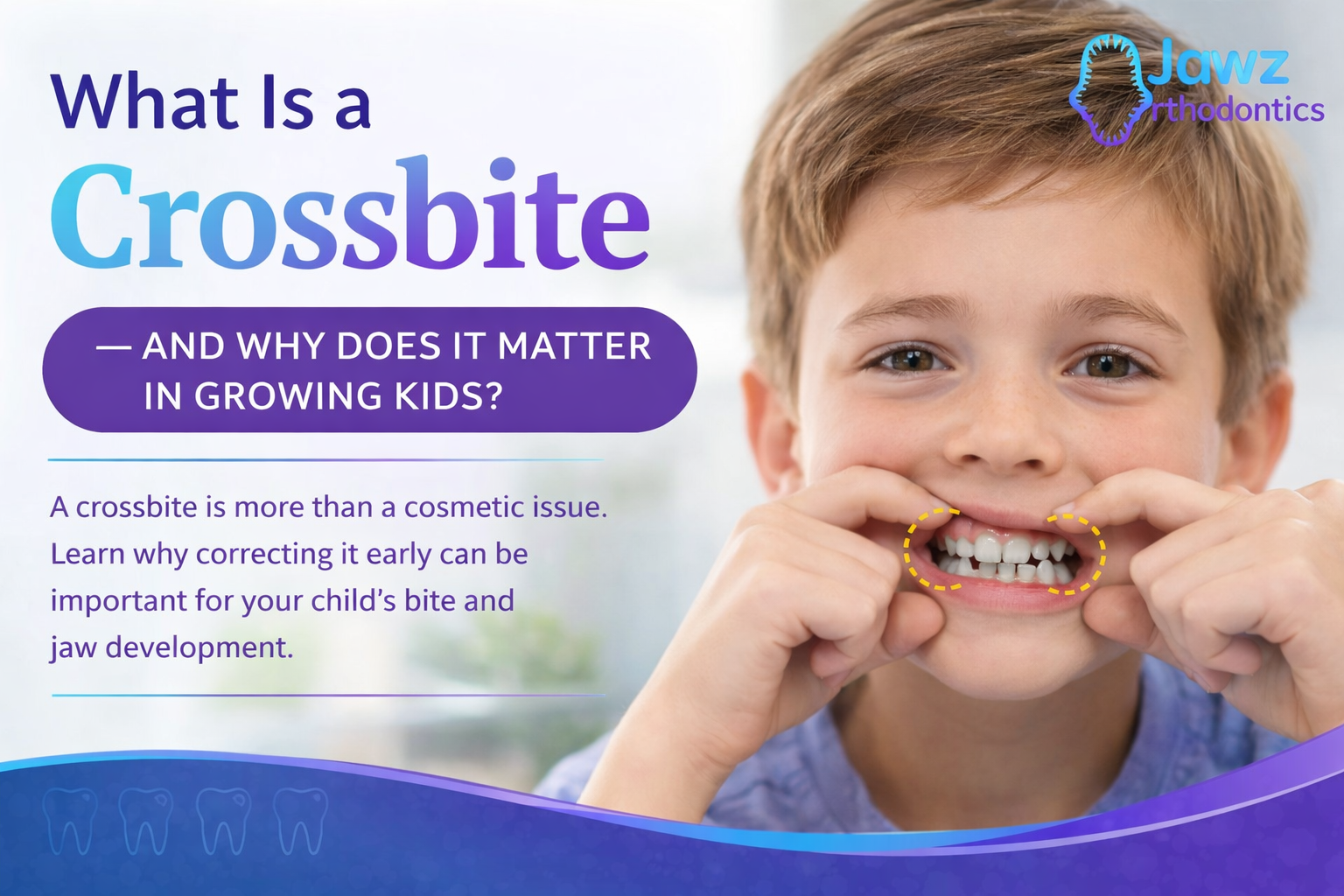
- a crossbite, underbite, or other bite problem
- jaw imbalance
- early or delayed loss of baby teeth
- front teeth that are more prone to injury
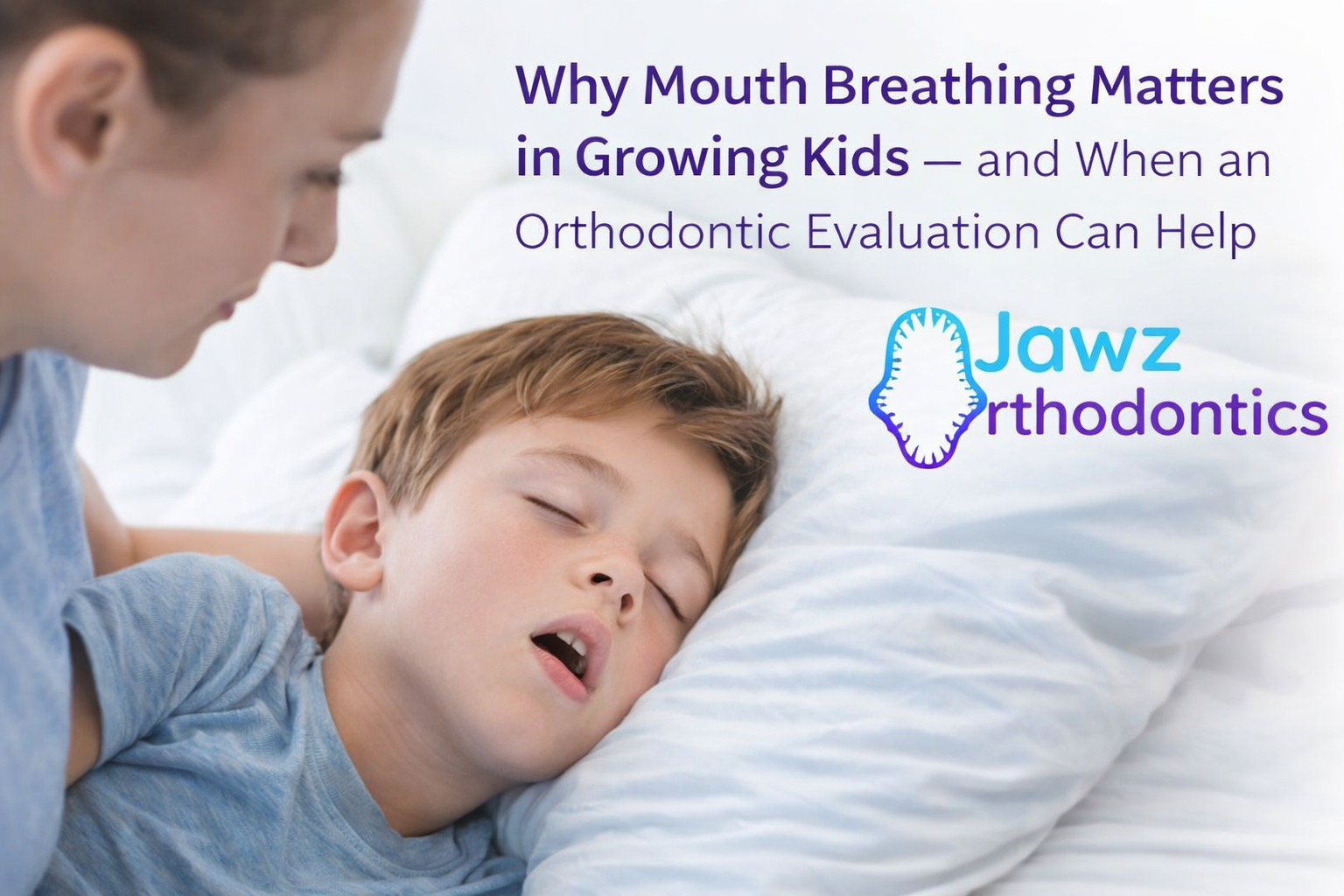
- mouth breathing or airway-related concerns
- shifting of the jaw when biting
In these cases, early guidance may help improve function, create space, support jaw development, or reduce the complexity of future treatment.
The key is that early treatment should have a clear purpose.
It should never be automatic.
What we look at during a Jawz evaluation
At Jawz Orthodontics, we do not focus only on whether teeth are crooked.
We look at the bigger picture, including:
- crowding and spacing
- bite relationship
- jaw growth and balance
- eruption timing
- functional patterns
- airway-related concerns when appropriate
When helpful, digital scans and imaging can give us a more complete understanding of how everything is developing.
Our goal is to make recommendations based on what your child actually needs — not on assumptions or routine timing.
Why timing matters so much
Orthodontic timing can make a real difference.
Starting too late can sometimes allow a problem to become more difficult. But starting too early, when treatment is not yet needed, can also create unnecessary time, expense, and inconvenience.
That is why the best orthodontic recommendation is not always:
“Let’s begin.”
“Everything looks good.”
“Let’s monitor growth.”
“Now is the right time to act.”
All three can be the right answer, depending on the child.
A no-pressure first step for families
For many parents, the hardest part is simply not knowing whether they should be concerned.
That is where an orthodontic evaluation can help.
A first visit can provide clarity about what is normal, what may need to be watched, and whether treatment would be helpful now or later.
At Jawz, we believe families deserve honest guidance and clear communication. If treatment is recommended, we will explain why. If monitoring is the better path, we will explain that just as clearly.
There is no pressure to begin treatment just because you came in.
Sometimes the most valuable part of the visit is simply leaving with answers.
The Jawz approach
At Jawz Orthodontics, we believe treatment should be based on need, timing, and long-term benefit.
We know parents are trying to make thoughtful decisions. We also know it can be hard to tell whether something is truly a concern or just part of normal growth.
That is why our approach is centered on:
- careful evaluation
- customized recommendations
- clear explanations
- thoughtful timing
- care that feels supportive, not rushed
Because the goal is not to start early.
The goal is to start at the right time.
Wondering whether your child needs braces yet?
If you have noticed crowding, bite changes, delayed eruption, mouth breathing, or anything else that seems off, an orthodontic evaluation can help you understand what is going on.
And if the answer is “not yet,” that is still an important answer to have.
A simple visit can provide clarity, reassurance, and a plan for what comes next.