Braces, Aligners, and Sensory Sensitivities: What Parents Should Know | Jawz Orthodontics
For children with sensory sensitivities, choosing between braces and aligners is not always simple. Learn what parents should consider and how to find the right fit.
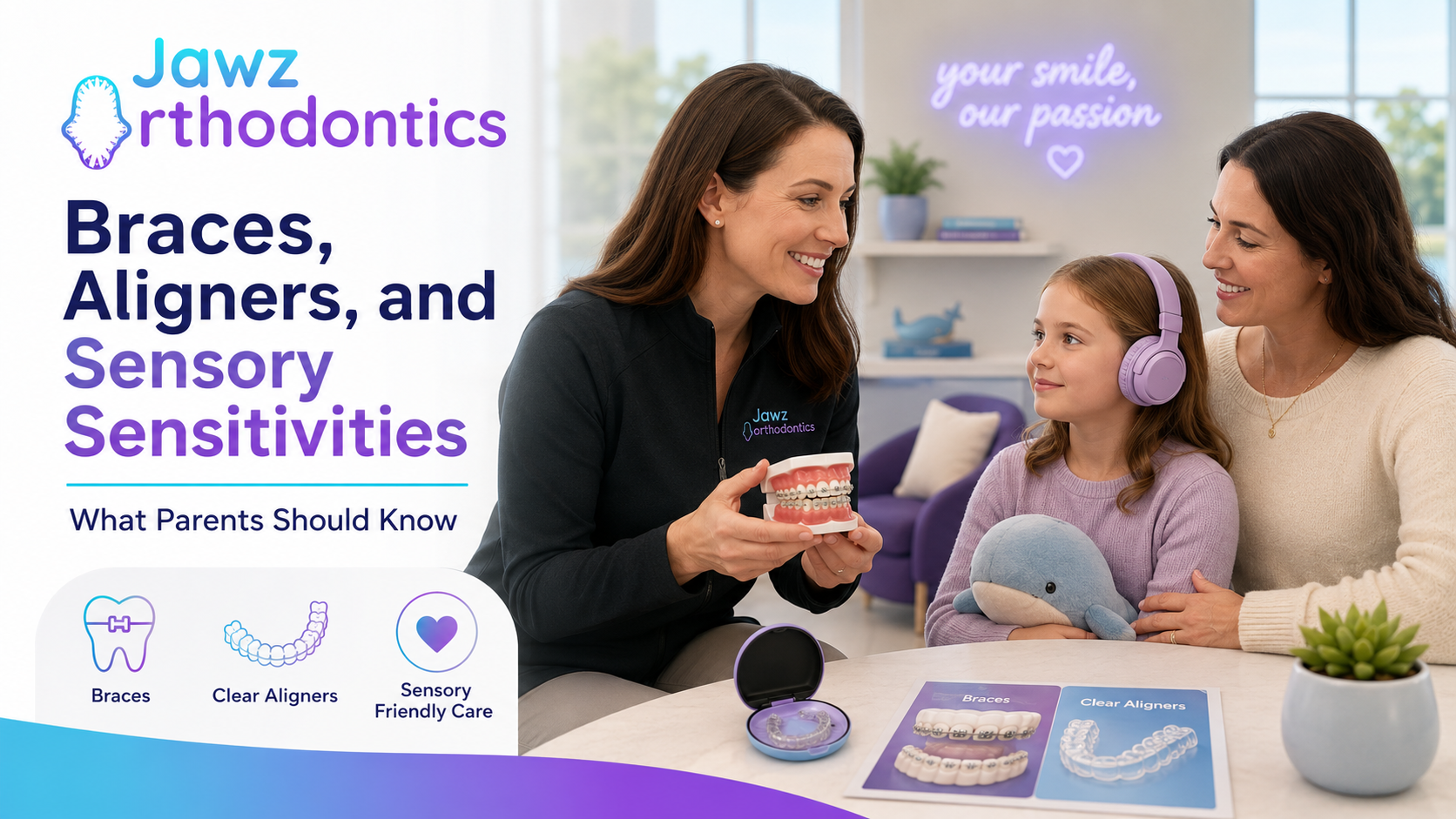
For many families, orthodontic treatment is not just about choosing between braces and aligners.
It is about choosing the option that a child can realistically tolerate.
If your child has sensory sensitivities, the questions may feel different from what other parents are asking. You may be wondering:
Will they tolerate something on their teeth all day?
Will attachments, pressure, or changes in routine feel overwhelming?
What if they cannot manage trays consistently?
What if brushing, eating, or appointments become stressful?
These are important questions. And at Jawz Orthodontics, they deserve thoughtful answers.
For children with sensory, developmental, or behavioral differences, the “best” treatment option is not always the most popular one. It is the one that fits the child.
Orthodontic treatment can feel very different for sensory-sensitive kids
Children with sensory sensitivities often experience touch, pressure, texture, sound, or change more intensely than other children.
That means orthodontic treatment can bring challenges that are easy to underestimate.
A child may be bothered by:
- brackets rubbing the cheeks or lips
- the pressure that comes after an adjustment
- the feeling of attachments on the teeth
- taking aligners in and out
- changes in speech
- extra brushing and oral hygiene steps
- food restrictions or changes in routine
- the simple awareness of “something is in my mouth”
None of this means treatment is not possible.
It means the treatment plan should consider more than just the bite.
Braces and aligners each have pros and cons
There is no universal answer for every child with sensory sensitivities.
Braces may be a better fit when:
- a child may struggle to wear aligners consistently
- removing and replacing trays would be frustrating
- keeping track of aligners would be difficult
- parents want a treatment option that stays in place
Because braces are fixed, they do not rely on the child remembering to wear them. For some families, that makes treatment more predictable.
At the same time, braces can create ongoing sensory input. A child may notice the brackets, wires, or soreness after adjustments more than other patients would.
Aligners may be a better fit when:
- a child is highly sensitive to brackets and wires
- smoother surfaces feel easier to tolerate
- the child is motivated and able to follow a routine
- fewer food restrictions would reduce stress
For some sensory-sensitive patients, aligners feel less intrusive than braces. For others, the need to remove, clean, and reinsert them becomes the harder part.
The right option depends on the child’s specific triggers, habits, and ability to participate in treatment.
The best question is not “Which is better?”
The better question is:
“Which option is more manageable for this child?”
That answer depends on things like:
- sensory triggers
- communication style
- routine flexibility
- oral hygiene tolerance
- ability to follow instructions
- parent support at home
- the type of orthodontic correction needed
A child who cannot tolerate trays for the required number of hours may do better with braces.
A child who is deeply bothered by brackets and frequent in-mouth adjustments may do better with aligners.
This is why individualized planning matters so much.
What parents can do before starting treatment
Preparation can make a big difference.
Helpful steps may include:
- talking with the orthodontic team about triggers ahead of time
- explaining what your child usually does well with and what tends to overwhelm them
- using simple language to describe what treatment will feel like
- practicing oral care routines before treatment begins
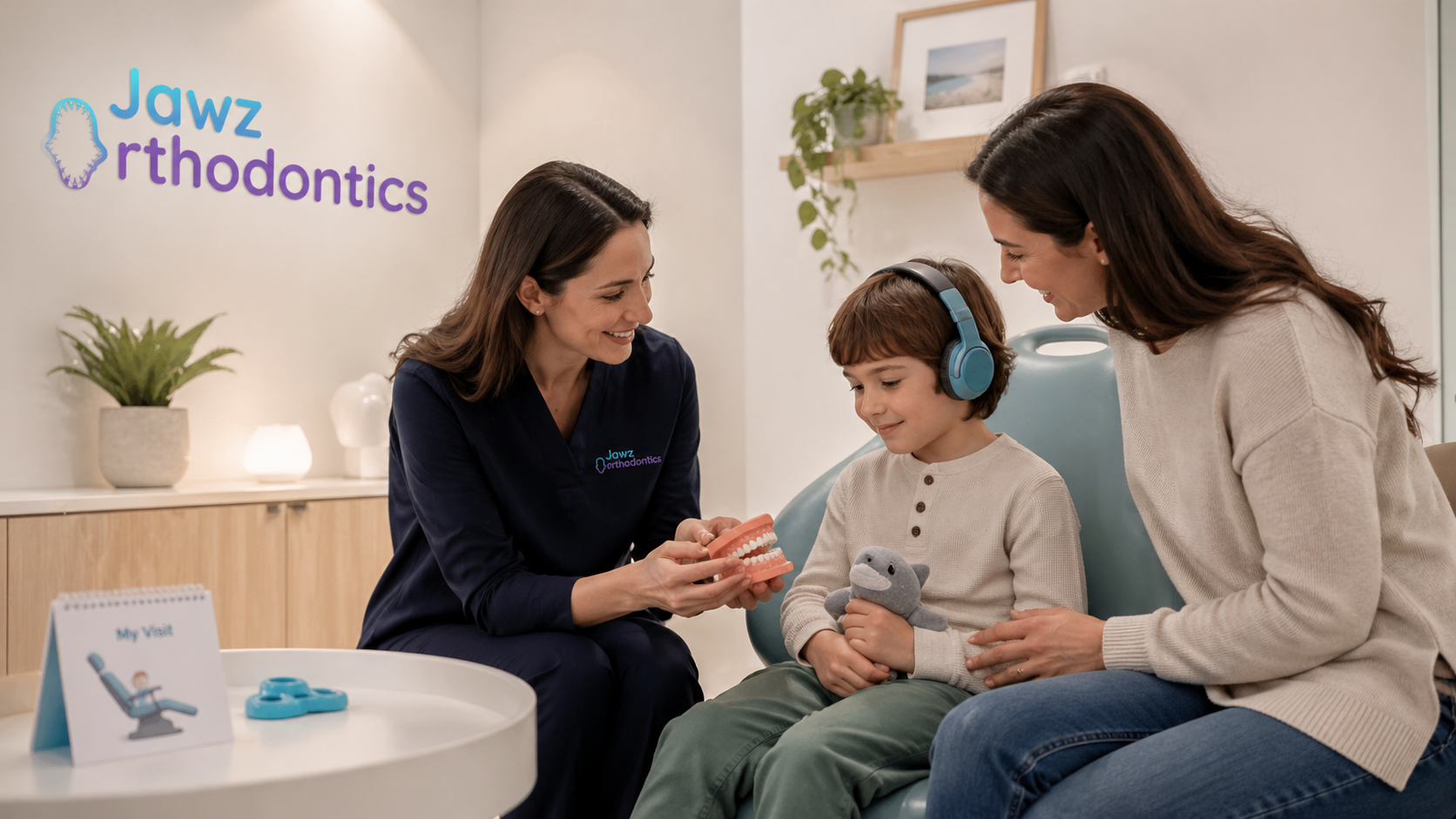
- using visual supports or social stories
- building in rewards, breaks, and predictable routines
When the team understands the child, treatment tends to go more smoothly.
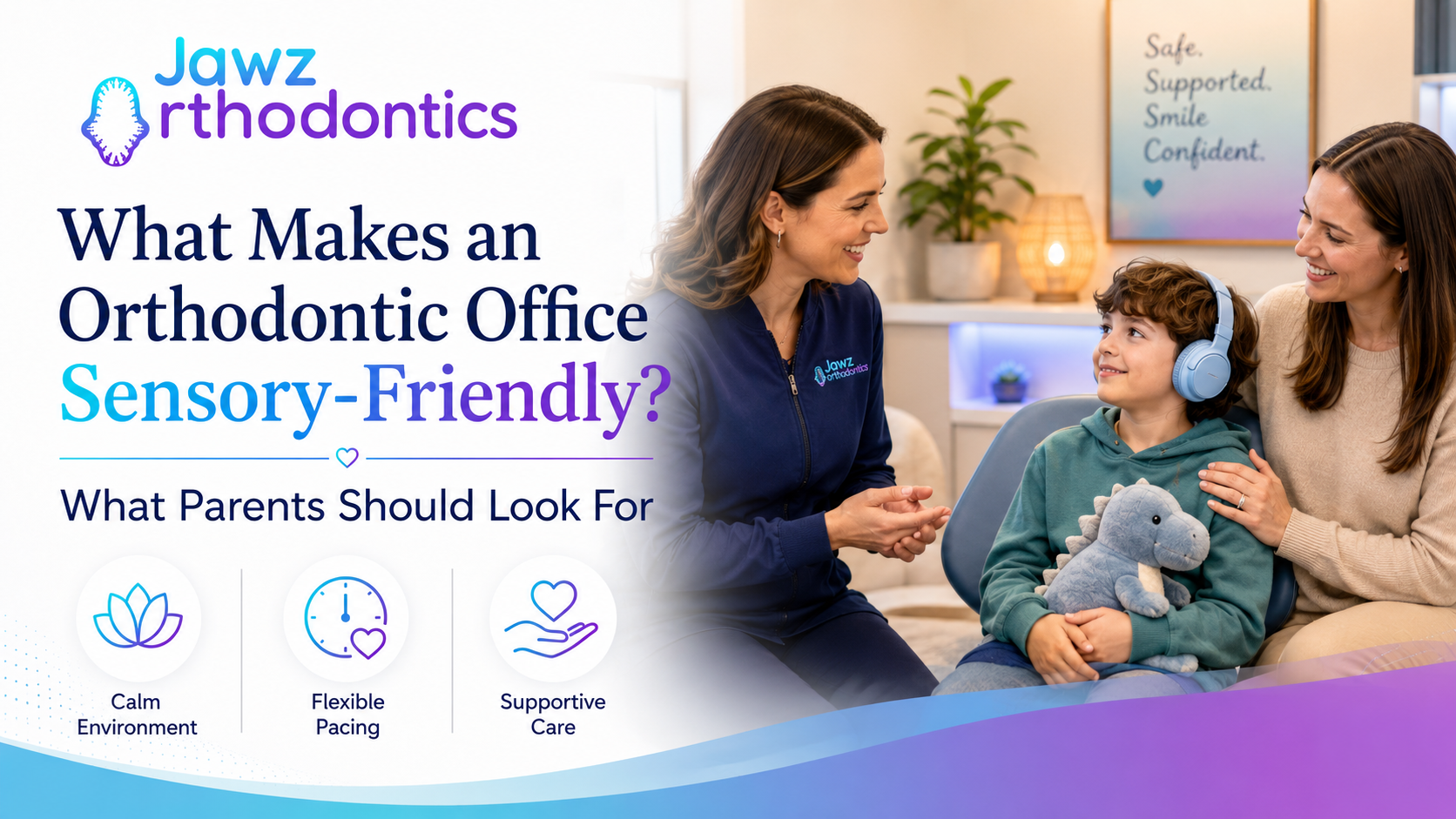
What a supportive orthodontic office should do
For children with sensory sensitivities, the treatment plan is only part of the experience.
The environment and communication style matter too.
That may mean:
- a slower introduction to treatment
- clear explanations before each step
- flexibility with pacing
- shorter appointments when possible
- a calm, supportive tone
- space for breaks when needed
- realistic expectations, not pressure
Parents should feel comfortable sharing what helps their child feel safe and regulated. That information is not extra. It is part of good care.
The Jawz approach
At Jawz Orthodontics, we understand that successful treatment is not just about what works on paper.
It is about what works for the child sitting in the chair.
For patients with sensory sensitivities, that means taking the time to understand comfort, communication, routine, and tolerance — not just the bite. Some children do best with braces. Some do better with aligners. Some need a more gradual approach before treatment even begins.
Our goal is to recommend the option that makes the most sense clinically and practically for the child and family.
Because the best treatment plan is the one a child can successfully live with.
Wondering which option may be best for your child?
If your child has sensory sensitivities and you are trying to decide between braces and aligners, an orthodontic evaluation can help bring clarity.
Sometimes the right answer is braces.
Sometimes it is aligners.
Sometimes it is starting with preparation and a plan.
Either way, your child deserves an approach that feels thoughtful, realistic, and supportive.