What Makes an Orthodontic Office Sensory-Friendly? | Jawz Orthodontics
A sensory-friendly orthodontic office can make a major difference for children with autism, anxiety, ADHD, or sensory sensitivities. Here is what parents should look for.
For many families, the biggest concern about orthodontic care is not treatment itself.
It is whether their child will feel safe enough to get through the visit.
If your child has sensory sensitivities, autism, ADHD, anxiety, or other special needs, an orthodontic office can feel overwhelming before anyone even looks at their teeth. Bright lights. New sounds. Unfamiliar people. Unexpected steps. Too much talking. Too much waiting. Too much all at once.
That is why a sensory-friendly approach matters.
At Jawz Orthodontics, we believe orthodontic care should be shaped around the patient, not the other way around. For some children, that means the most important part of the visit is not what treatment is recommended. It is how the experience is handled.
A sensory-friendly office is about more than being “nice”
Many offices are warm and welcoming. That is important, but it is not the same as being sensory-friendly.
A sensory-friendly orthodontic office understands that some children process sound, light, touch, pressure, transitions, and communication differently. It also understands that cooperation is often easier when a child feels regulated, prepared, and respected.
That means the environment, pacing, and communication style should support the child — not push the child to simply “get through it.”
What can make orthodontic visits hard for sensory-sensitive children?
Every child is different, but common challenges may include:
- bright overhead lighting
- noisy equipment
- unfamiliar smells
- having someone close to the face
- being asked to open wide or stay still
- sudden transitions
- waiting too long
- too much verbal information at once
- changes in routine
- physical sensations inside the mouth
For some children, even a simple exam can feel intense if the environment is not handled thoughtfully.
What parents should look for in a sensory-friendly orthodontic office
A sensory-friendly office does not need to look dramatically different. Often, the biggest difference is in how the team approaches care.
Here are some signs to look for:
1. The team asks questions before the visit
A supportive office wants to know what helps your child succeed.
That may include:
- sensory triggers
- communication preferences
- anxiety patterns
- calming tools
- whether your child does better with visual preparation, breaks, or shorter steps
If the team wants to understand your child before the appointment begins, that is a very good sign.
2. The office is flexible with pacing
Not every child can tolerate a full visit the same way.
Some patients do better with:
- a slower introduction
- a shorter first appointment
- step-by-step exposure
- breaks during the visit
- extra time to observe before participating
Flexibility is not a bonus. For some families, it is what makes care possible.
3. Communication is clear and calm
A sensory-friendly team explains what will happen in a simple, predictable way.
That may mean:
- telling the child what is coming before it happens
- using fewer words
- avoiding rushed instructions
- showing tools before using them
- allowing time to process
For many children, predictability lowers stress.
4. The office respects regulation tools
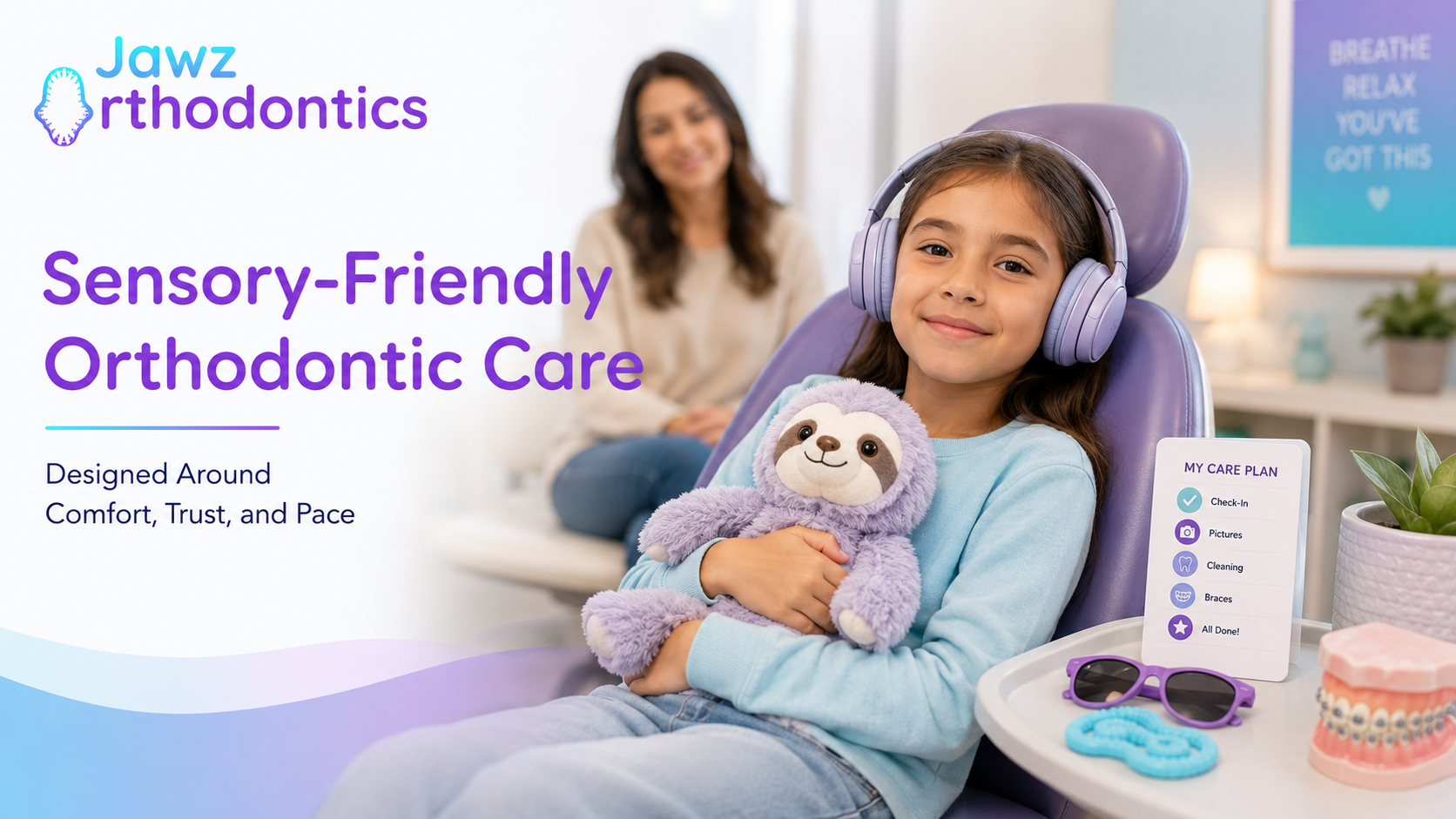
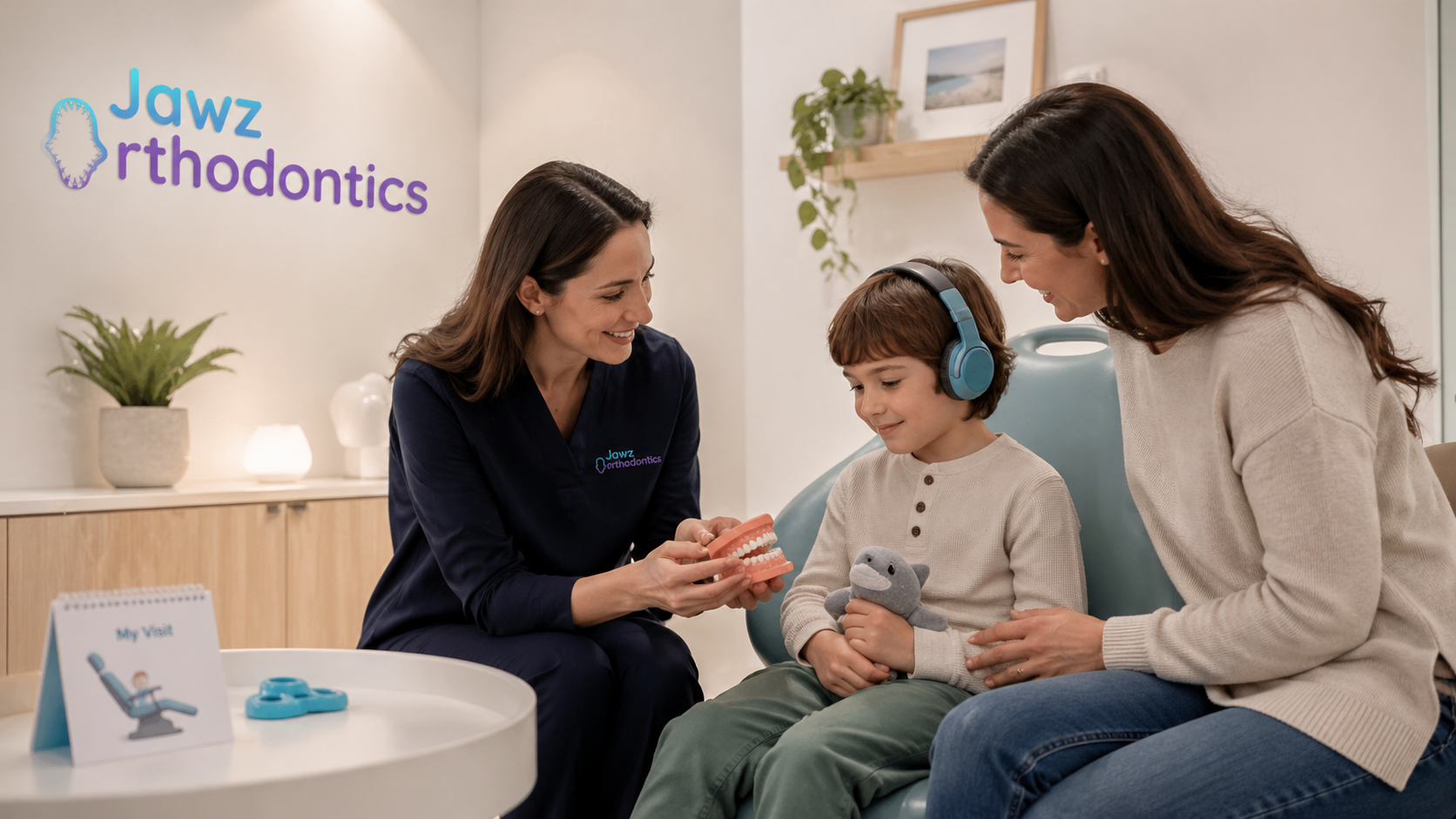
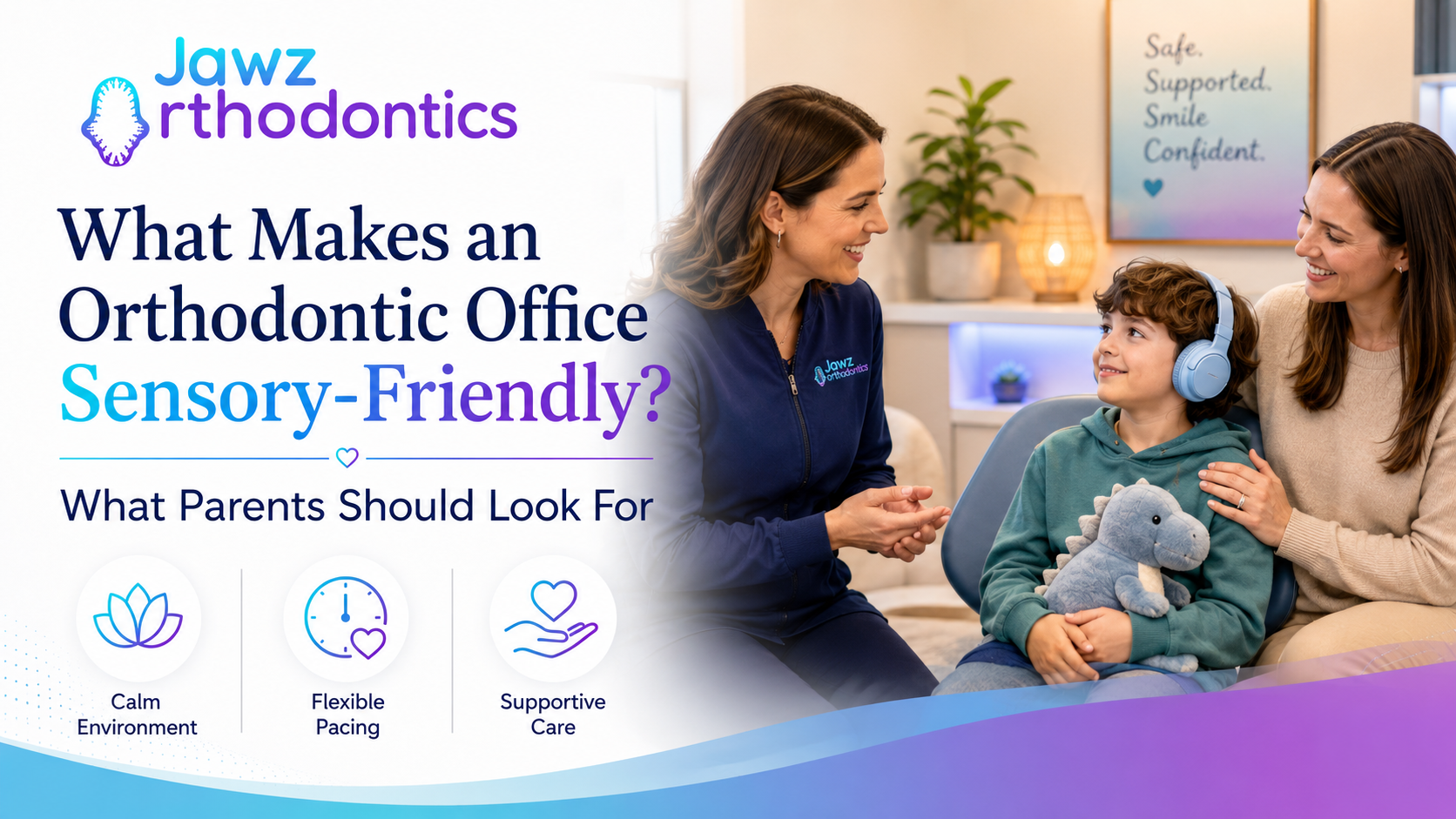
Headphones, comfort items, fidgets, visual supports, sunglasses, weighted lap pads, or parent coaching can all help some children feel more secure.
A good office does not see these as distractions.
It sees them as supports.
5. The team does not force unnecessary steps
A thoughtful office knows the goal is progress, not pressure.
Sometimes the win is completing the full visit. Sometimes the win is sitting in the chair, meeting the team, or tolerating one new step. A sensory-friendly mindset values trust-building, not just compliance.
What a first visit should feel like
For a child with sensory sensitivities, the best first visit often feels calm, clear, and manageable.
Parents should leave feeling like:
- the team listened
- their child was respected
- the visit was paced appropriately
- they have a clearer understanding of treatment and timing
- the office sees their child as an individual, not a problem to solve
That kind of experience matters.
Because when a child feels safe, everything gets easier from there.
Why this matters in orthodontics specifically
Orthodontic care is not just one visit. It is a process.
That means the office experience matters even more for children with special needs. If a child feels overwhelmed from the start, treatment can become much harder for the child, the parent, and the team. But when the right supports are in place, care often becomes far more manageable.
The goal is not perfection.
The goal is building an approach your child can tolerate and trust over time.
The Jawz approach
At Jawz Orthodontics, we know that successful care starts with understanding the patient in front of us.
For children with sensory sensitivities or special needs, that means looking beyond the bite. It means thinking about comfort, pacing, communication, and what will realistically help a child feel safe enough to participate.
Some children need a slower start. Some need extra preparation. Some need more flexibility. That does not make their care less possible. It means their care should be more personalized.
Because thoughtful orthodontic care is not only about how teeth move.
It is also about how patients feel while they are here.
Looking for a more supportive orthodontic experience?
If your child has sensory sensitivities and you are wondering what kind of office environment will help them succeed, a first visit can tell you a lot.
You should feel heard.
Your child should feel respected.
And the plan should feel realistic for your family.
That is what a sensory-friendly approach is meant to do.